Reference
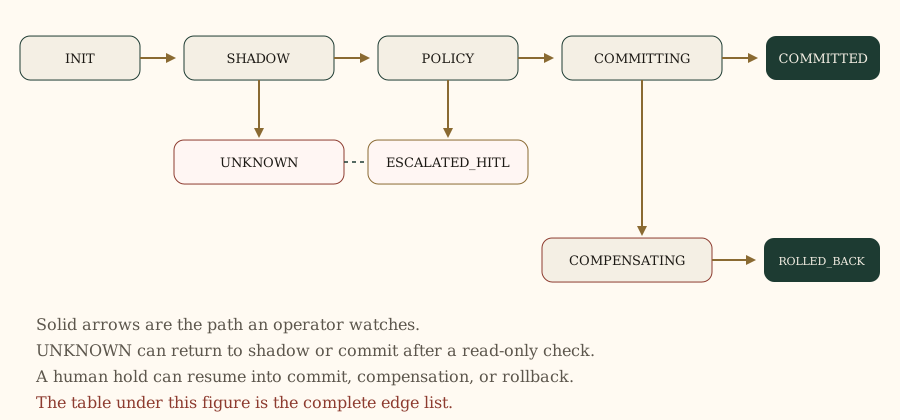
Nine states, and the edges between them.
A self-edge is allowed. Any other edge that is not listed here is AtpInvalidTransaction. COMMITTED and ROLLED_BACK are terminal: their outgoing sets are empty.
| From | To |
|---|---|
| INIT | SHADOW_EXECUTING, ROLLED_BACK |
| SHADOW_EXECUTING | POLICY_EVAL, UNKNOWN_RECONCILING, COMPENSATING, ESCALATED_HITL |
| POLICY_EVAL | COMMITTING, COMPENSATING, ESCALATED_HITL |
| COMMITTING | COMMITTED, UNKNOWN_RECONCILING, COMPENSATING, ESCALATED_HITL |
| UNKNOWN_RECONCILING | SHADOW_EXECUTING, COMMITTING, COMPENSATING, ESCALATED_HITL, COMMITTED, POLICY_EVAL |
| COMPENSATING | ROLLED_BACK, ESCALATED_HITL, UNKNOWN_RECONCILING |
| ESCALATED_HITL | POLICY_EVAL, COMMITTING, COMPENSATING, ROLLED_BACK, UNKNOWN_RECONCILING |
Unknown outcomes
The intent is persisted before the external call. If the process dies, or the handler reports unknown, recovery moves the transaction to UNKNOWN_RECONCILING and asks the reconciliation tool, or the idempotency store, whether the effect exists. Found means the original phase succeeded. Not found, with attempts left, retries. Otherwise the hold is UNKNOWN and a person decides. HTTP 500 is a definite failure. HTTP 429 is retryable. A timeout after the handler ran is unknown, so a later reconcile can see the effect and will not apply it twice.
Rollback order
If no step declares dependsOn, the plan is a chain. If any step declares dependencies, every dependency is explicit and a cycle rolls back from INIT. Compensation walks touched steps in reverse topological order. A live branch is restored or the mapped inverse tool is invoked. A failed live call that never applied is discarded, not inverted. A live irreversible step is marked orphaned.
Normative detail is in RFC-0001.